
Tradition meets modern pain therapy – targeted, profound and regulating
Trigger acupuncture is a specialized form of acupuncture within traditional Chinese medicine (TCM). It combines the classical knowledge of meridians and Qi flow with modern findings on myofascial trigger points – i.e. localized muscle hardening that can trigger pain and radiate to other parts of the body.
Fine acupuncture needles are inserted directly into tense muscle areas to release so-called myogelosis, stimulate blood circulation and harmonize the flow of Qi and blood. Trigger acupuncture works with pinpoint accuracy – and is always embedded in the holistic context of TCM.
Her aim is to treat the cause of pain, release blockages and restore the balance of yin and yang.
In TCM, pain arises where the free flow of Qi and blood is disturbed. Trigger acupuncture uses proven diagnostic methods – such as tongue and pulse diagnosis – as well as careful palpation of the muscles to identify active trigger points and view them in the context of the meridian system (Jing-Luo).
The combination of classic acupuncture points and locally applied needles enables targeted treatment of muscle tension. This releases blockages in the flow of Qi, mobilizes blood and energy and activates the body’s self-regulation.
Trigger points are a common cause of chronic or recurring pain – e.g. in the back, neck or shoulder area. Targeted needling of these areas can release muscle spasms, reduce local inflammatory reactions and modulate pain conduction in the nervous system.
In many cases, there is immediate noticeable relief: mobility improves, tension eases and the sensation of pain decreases. Trigger acupuncture can optionally be supplemented with electrostimulation or cupping.
The big advantage: the method works directly on the cause – without medication, with few side effects and with a lasting effect.
Trigger acupuncture is particularly suitable for patients with muscle-related pain, tension and restricted movement – even if other treatments have shown little success to date.
Typical indications:
Trigger acupuncture can be sensibly combined with other TCM methods such as Tuina massage, Qi Gong or Chinese herbal therapy – individually tailored and holistically accompanied.
A session lasts approx. 10-20 minutes and costs €200 (plus anamnesis approx. €100). Trigger point diagnostics and acupuncture treatment are included.
Reimbursement is possible with supplementary health insurance or private insurance. Please clarify this directly with your health insurance company.
Practical experience
I recently had a very positive experience with the TCM doctor. The atmosphere was calm and harmonious - you immediately felt at ease. The doctor was very professional, patiently asked about the reason for my visit and showed a deep understanding of my condition. I felt listened to and respected throughout the consultation. She was able to quickly identify the cause of my problem and started treatment straight away.
I received an acupuncture treatment - she asked me to relax and checked that everything was OK each time before she inserted a needle. Everything was done efficiently but at the same time with great care. Her empathy, kindness and open nature made it easy to trust her recommendations.
The receptionist was also very friendly and patient. She explained to me exactly how to prepare the herbs correctly and answered all my questions.
All in all, a very professional and cordial team.
Highly recommend! I have only been here once, after the treatment I feel much better. Mrs. Zhang is very friendly and professional, she can really help me. I really recommend her!
The doctor is very friendly and professional, and the environment is very good
Highly recommended! A practice where you immediately feel comfortable and in good hands. The atmosphere is warm and extremely friendly. I was given a delicious tea between treatments. Ms. Zhang is a very experienced and extremely meticulous expert in her field. Thanks to her pulse diagnosis and holistic approach, I was able to see an immediate improvement in my symptoms from the very first consultation. I was thrilled! A short path to healing, which is very rare. I am a musician and had injured two fingers on my right hand, resulting in numbness and pain when bending. After the first treatment (acupuncture and Tuina) I was free of pain! I enjoy the subsequent treatments so that I can simply continue to do myself good. I'm super happy because in my profession, as a freelance musician, you really can't afford to miss weeks of work or wait a long time for appointments. This is a great practice that has completely won me over. Ms. Zhang's knowledge is not just theoretical, but is directly applied with artful composure, sound knowledge of human nature and in a very warm-hearted way. I am full of joy about it. Mega! Thank you, dear Ms. Zhang.🙏
FAQs
Many patients come to our practice with specific questions. Here we answer the most common ones – honestly, comprehensibly and to the point:
When the needle is inserted, some people feel a brief twitching or pressure sensation. This indicates that the trigger point has been activated. Most people experience this as liberating or releasing.
Trigger acupuncture works specifically in the muscle tissue, directly on pain points, while classic acupuncture focuses on energetic points along the meridians. In our practice, we combine both individually.
Many patients feel a clear improvement after the first treatment. In chronic cases, it may take several sessions.
This depends on the symptoms and duration. For acute problems, a few sessions are often enough; for chronic pain, we plan individually.
Occasionally there may be slight muscle soreness, tiredness or small bruises – mostly signs of an active regulation process.
Yes – particularly effective in combination with Tuina, Qi Gong or Chinese herbal therapy.
Yes – if the migraine is linked to muscular tension, trigger acupuncture can be very effective.
Basically yes – we adapt the intensity and technique to suit the individual. The method can be particularly helpful for chronic tension.
“Deqi” describes the characteristic feeling when the needle reaches the Qi flow – often felt as pressure, warmth, heaviness or radiance.
Regular exercise (e.g. Qi Gong), appropriate nutrition and heat applications promote the sustainability of the treatment.
Pain does not originate in the head – but often deep in the tissue.
In our practice, we combine the knowledge of traditional Chinese medicine with modern insights into the causes of muscular pain. For us, trigger acupuncture is a powerful tool that targets specific points, releases blockages and restores the body’s natural flow.
We never just think locally. Every pain has a history – physical, emotional, energetic. We take the time to look closely, listen and treat individually.
For us, trigger acupuncture is not an external technique, but an invitation to the body to get back in touch with itself – step by step, mindfully and effectively.
Would you like to have your pain treated in a targeted and sustainable way?
Book your trigger acupuncture session at our practice in Berlin-Friedenau now – conveniently online via Doctolib or using the contact form. We will be happy to advise you personally as to whether this method is suitable for you.
Targeted impulses. Noticeable relief. More freedom of movement.
In our practice for traditional Chinese medicine in Berlin-Friedenau, we work with all five central pillars of this proven healing method: acupuncture, Tuina massage, nutrition according to the five elements, Qi Gong/Tai Chi and Chinese herbal therapy.
Each of these methods can be used individually or in a sensible combination – individually tailored to your complaints and life situation. The result is a holistic therapeutic approach that brings body, mind and environment into harmony – directly on site in Berlin and in your area.

Tuina is a therapeutic form of massage that uses targeted movements to release blockages, activate the flow of energy and promote physical and emotional balance. It is particularly suitable for muscle tension, restricted movement or stress-related complaints.

Dietetics according to the five elements is based on the energetic effect of food. It helps to strengthen the body, regulate digestion and promote inner balance. We will be happy to advise you in Berlin - practical, individual and suitable for everyday use.
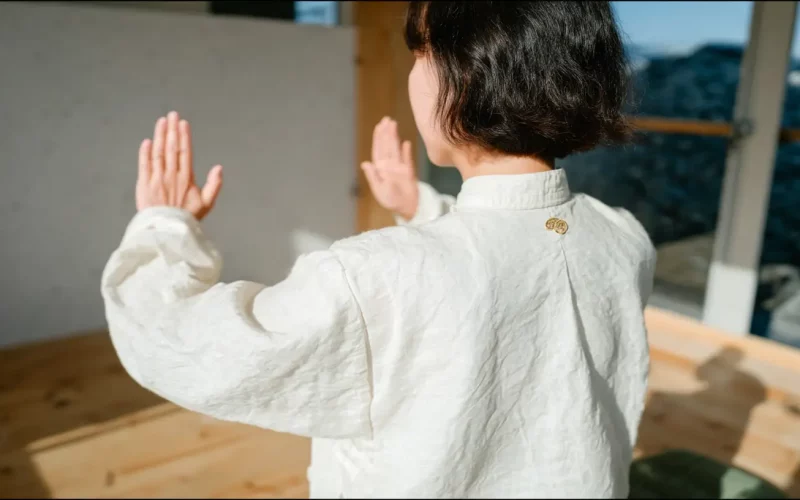
These forms of movement are an integral part of Chinese medicine and combine slow, mindful exercises with conscious breathing. They support the flow of energy, have a relaxing effect and strengthen body and mind - ideal for preventative health care or as an accompaniment to therapy.

Herbal therapy is a central pillar of TCM. Based on sound diagnostics, we compile individual formulas from herbal active ingredients to balance internal imbalances. Our practice in your area offers comprehensive advice and support.
Wir verwenden Cookies und ähnliche Technologien, um unserere Website optimal bereitzustellen. Mit deiner Zustimmung können wir Nutzungsdaten verarbeiten . Weitere Informationen findest du in unserer Datenschutzerklärung.